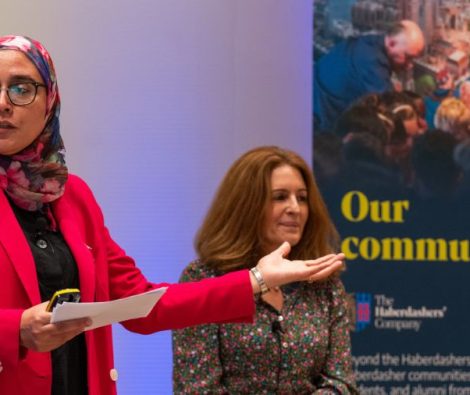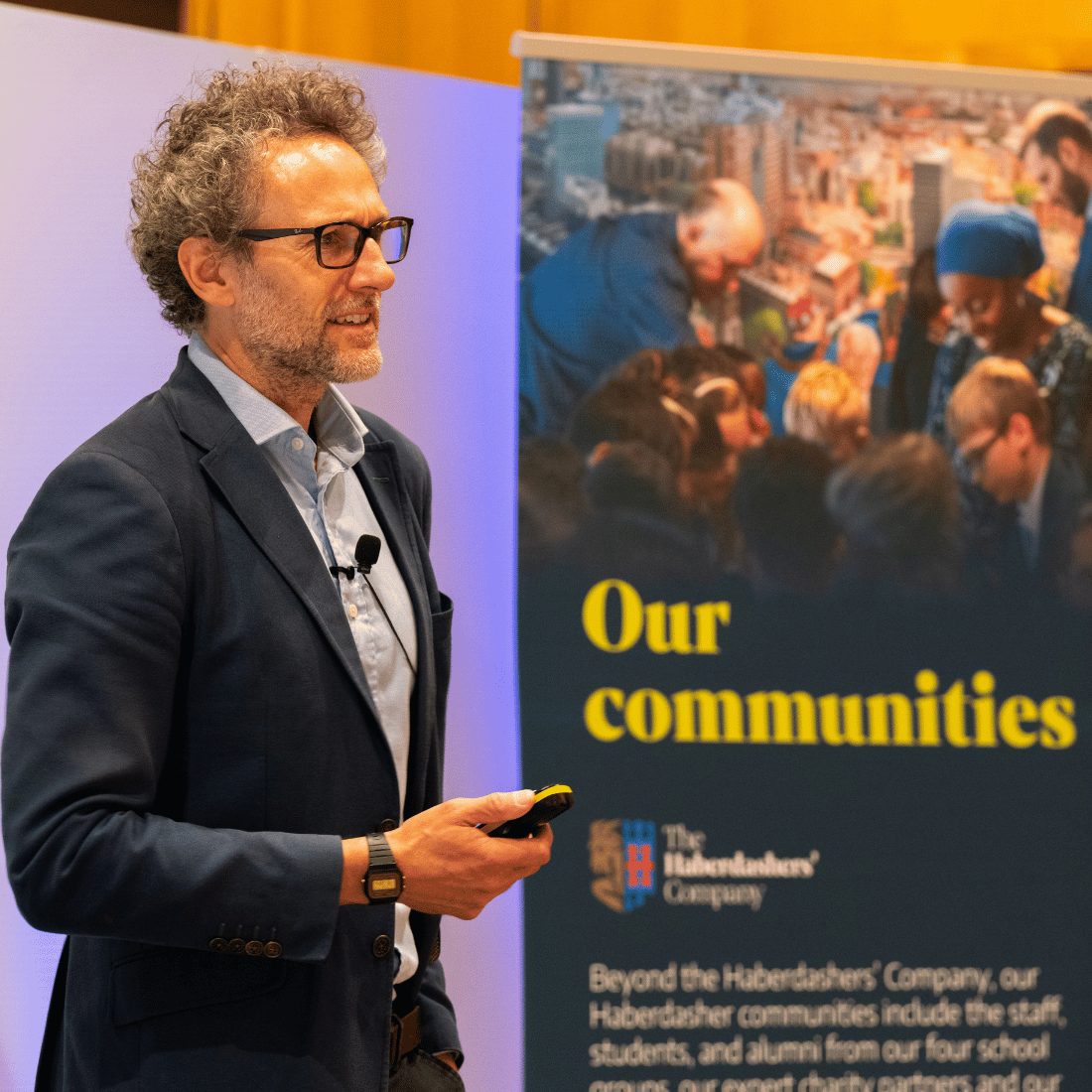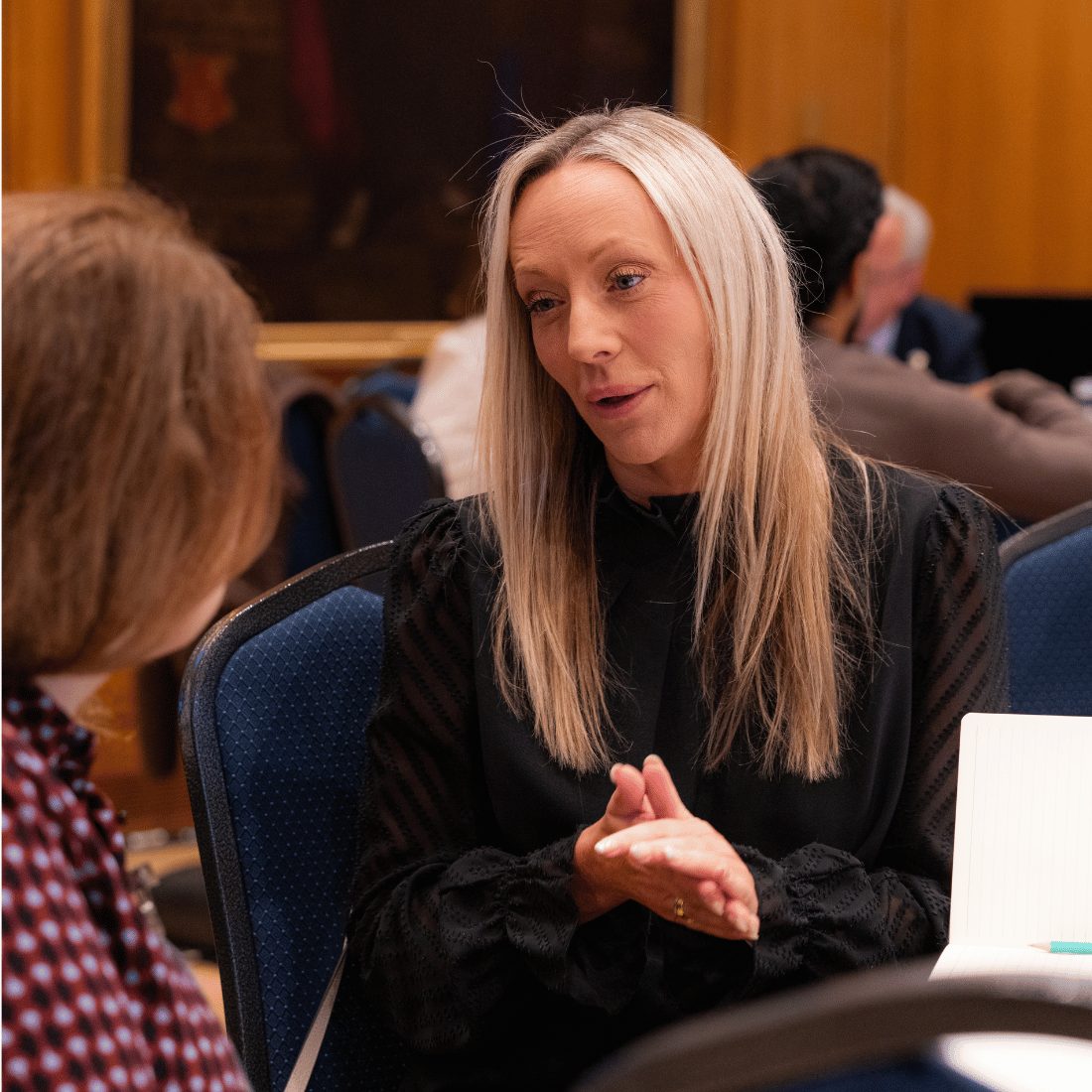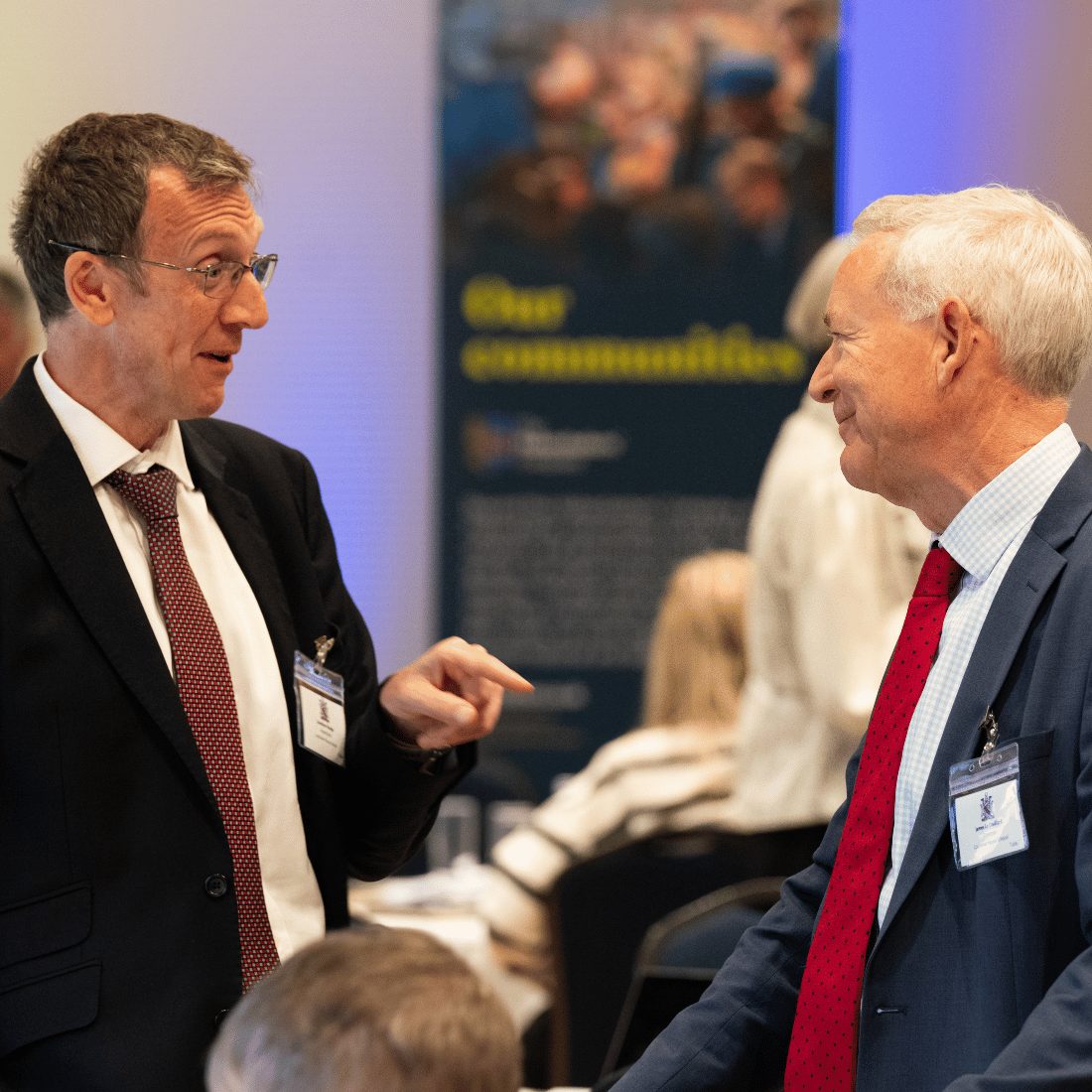
On 4 June 2026, school leaders, governors, trustees and practitioners from across the Haberdashers’ family gathered at Haberdashers’ Hall in West Smithfield for the annual Education Symposium.
This year’s theme — The Civic Role of Schools and Trusts — posed a question that ran through the whole day: what do schools owe their communities, and what does it look like when they act on that obligation? The answer, articulated by speakers from inside and beyond the family, was both challenging and galvanising. Early in the conference the relevance for governors was articulated with these powerful words.
Governors are the custodians of the soul of the school
Schools are not simply providers of qualifications. In a fractured civic landscape, they are among the last institutions that communities still genuinely trust. Teachers are ranked in the top five most trusted professionals in Britain at 85 per cent, at a moment when politicians register just 9 per cent.
“The fact that a school is not an institution but a crucial part of any local community.” — Governor, Elstree
The day opened with two keynote addresses that set the intellectual framework. James Townsend of The Reach Foundation, drawing on data that showed the scale of entrenched disadvantage argued that great schools are necessary but not sufficient. He set out what it looks like when schools build rigorous, relational partnerships with families and with the systems around them. His challenge — “imagine if our approach to relationships with families was as rigorous as our approach to curriculum” — resonated with delegates throughout the day. Nicola Noble of Big Education then brought that argument to life through the work of Surrey Square Primary School in Southwark, where a community built around the principle of working ‘with’ rather than ‘for’ its families has driven measurable change in child agency, health and wellbeing, and seeded the Old Kent Road Family Zone, which now engages over 450 participants a month.
Across three themed sessions, Haberdashers’ own practitioners showed what civic purpose looks like in practice within the family. Katie Scott of Hatcham College described the school’s journey to a smartphone-free site — a story that turned out to be as much about building community trust as about policy, with 75 per cent of parents responding to a consultation in larger numbers than for any other communication and overwhelmingly in support. Sarah Mitchell of Haberdashers’ Academies Trust South and Tom Howells of Borough Academy presented a framework for making KS2 to KS3 transition a strategic priority rather than an administrative event — addressing a collapse in pupil engagement at Year 7 that even experienced governors had not fully appreciated. Monia Zahid and Claire Shooter of Haberdashers’ Elstree Schools shared how a diverse school community navigates global conflict with pastoral confidence and cultural clarity. Jan Mintram of Slade Green Primary showed how civic curriculum and community engagement can be the organising logic of a school rather than an add-on. Josh Plotkin and Phil Campbell demonstrated, through the Elstree–London Academy partnership, what genuine cross-boundary collaboration looks like. Clare Jarmy of Elstree offered a philosophical grounding for the day’s civic argument rooted in the Haberdashers’ Company’s six-hundred-year history. And Nichola James of Monmouth brought the climate strand — pupil-led, community-connected, and civic in every sense.
The afternoon was given over to Sabrina Luisi of The Brilliant Club, HATS trustee and charity Committee member whose personal story — a fax machine and a withdrawn Oxford application — crystallised the day’s argument about structural invisibility and the fax machine moments that shape young lives. Each school group produced concrete pledges: to open buildings to communities, to build parent hubs, to run CPD on family relationship building, to move on mobile phones, and to take the Haberdashers’ network relationship from an annual conference into live collaboration. Operation Croesau — Monmouth’s standing invitation to the whole family — was agreed in the room.
“The potential of schools to become hubs for community engagement and cohesion.” — Governor, HATS
Feedback from delegates was overwhelmingly positive. The average rating for usefulness was 4.71 out of 5, the Net Promoter Score reached +64, and 83 per cent rated collaborative potential at 4 or 5 out of 5. Delegates described the day most frequently as inspiring, informative, engaging and collaborative.
Quote